|
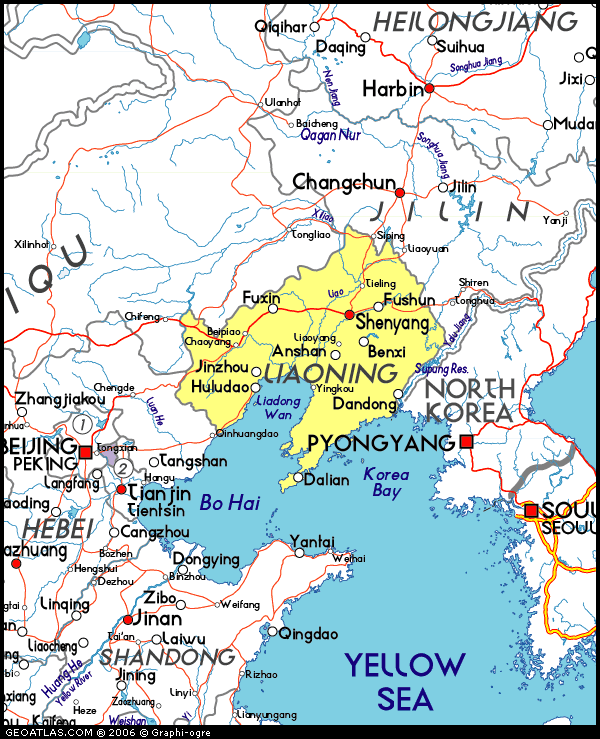
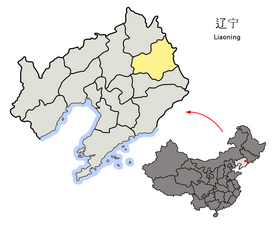
Fushun lies in the
east part of Liaoning Province, neighboring Jinglin
Province in its east. It occupies an advantageous
location, 200 kilometers from the Port of Yingkou and
400 kilometers from the Port of Dalian with expressway
and railway linking between them. The capital city of
Liaoning, Shenyang, is only 45 kilometers away.
|
 |
|
|
FUSHUN District |
|
|
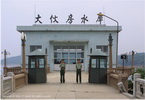 |
Dahuofang Reservoir
大伙房水库 |
|
GPS: |
41.88363,
124.11144 |
|
Fushun Dahuofang Reservoir
is the largest man-made lake in
northeast China. (110 km2 = 42
sq mi) The Dahuofang Water
Tunnel is an 85.3 kilometers
(53.0 mi) tunnel eight meters in
diameter which provides water
from the Dahuofang Reservoir to
the cities of Shenyang, Fushun,
Liaoyang, Anshan, Panjin,
Yingkou, and Dalian. |
|
|
| xxxxxxxxxxxxxxxxxxxxxx |
|
|
|
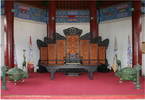 |
Hetu-Arla
赫图阿拉城 |
|
GPS: |
41.70459,
124.86576 |
|
Constructed in 1603, Hetuala
City is an ancient city of 400
years. In 1616, the first day of
the 44th ruling year of Ming
dynasty according to Chinese
lunar calendar, Nurhaci ascent
the throne and established Late
Jin Dynasty. |
 |
|
| xxxxxxxxxxxxxxxxxxxxxx |
|
|
|
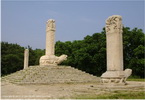 |
Marshal Tomb /
Zhangxueliang General Memorial
Yuanshuailin
张学良将军纪念 |
|
GPS: |
41.93176,
124.30011 |
|
N/A |
|
|
| xxxxxxxxxxxxxxxxxxxxxx |
|
|
|
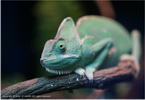 |
Royal Ocean World
皇家海洋主题乐园 |
|
GPS: |
41.86652,
123.74171 |
|
Royal Ocean Park includes the
main themed areas of “Royal
Polar Ocean World,” “Century
Jungle,” “Hawaii Surfing Beach,”
“Hawaii Happy Island,” and
“Poseidon's Fun Park.” |
|
|
| xxxxxxxxxxxxxxxxxxxxxx |
|
|
|
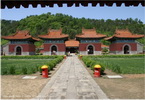 |
Yongling Tombs / Qingyong Tomb
清永陵 |
|
GPS: |
41.71018,
124.80263 |
|
The whole cemetery is composed
of three courtyards: the former
palace, Fangcheng and Baocheng.
Compared with other mausoleums
of the Qing Dynasty, it has two
prominent characteristics: one
is that there are many tombs
buried in one cemetery, and the
other is that the four emperors
buried here did not make any
achievements in history before
their lives, and they are all
distinguished by their
descendants. |
|
|
| xxxxxxxxxxxxxxxxxxxxxx |
|
|
|
|
|
FUSHUN City |
|
|
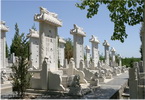 |
Cemetery
|
|
GPS: |
na |
|
N/A |
|
|
| |
|
|
|
 |
Laodong Park
劳动公园 |
|
GPS: |
41.86719, 123.92669 |
|
N/A |
|
|
| |
|
|
|
 |
Memorial of Leifeng
雷锋纪念 |
|
GPS: |
41.85015,
123.80185 |
|
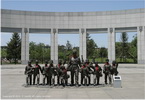
Originally built as a museum in
1964, the building was converted
to the Lei Feng Memorial Hall in
1992. The park mimics in
miniature, the royal tombs. It
is beautifully set out. Inside
the hall are modern,
well-presented displays in both
English and Chinese. Lei Feng
was born in Fushun and became
famous throughout the country. |
|
|
| |
|
|
|
 |
Xilutian Coal mine
西露天矿 |
|
GPS: |
41.83074,
123.7985 |
|
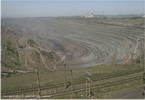
It is the largest open cast coal
mine in Asia. It is 6.6
kilometers from east to west,
north to south it is 2 km wide,
with a total area of 13.2 square
kilometers. The vertical depth
is 388 meters mining. The site
opened in 1914. |
|
|
| |
|
|
|
 |
Pingdingshan memorial |
|
GPS: |
41.83471,
123.92567 |
|
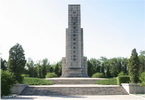
In 1932, Japan invaded the
northeast of China. In an event
known to history as the
Pingdingshan Tragedy, 3000
people were killed by the
Japanese. This site marks a mass
grave where, in 1972, the bodies
of 800 victims were found. |
|
|
| |
|
|
|
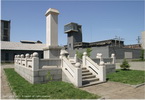 |
Fushun War Criminals Centre
抚顺战犯管理所 |
|
GPS: |
41.88731,
123.90239 |
|
Fushun War Criminals Management
Centre, also known as Liaodong
No. 3 Prison or Liaoning No. 3
Prison, was the site of the
re-education of Manchukuo,
Kuomintang and Japanese
prisoners of war, held by China
from 1950 onwards. It was
located in the Xinfu District,
Fushun, Liaoning. |
|
|
| |
|
|
|
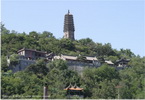 |
Gao'er Mountain Park
高尔山古塔 |
|
GPS: |
41.89273,
123.90701 |
|
A beautiful area of mountainous
parkland dotted with Buddhist
temples, statues and pagodas.
The tall pagoda at the top of
the hill dates to 1088 making it
the oldest extant pagoda in
China. It is 14.1 metres high
with a diameter of 6.8 metres. |
|
|
| |
|
|
|
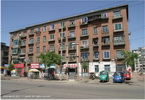 |
FUSHUN city
抚顺 |
|
GPS: |
41.88265,
123.94284 |
|
Fushun was the former capital of
the Manchurian Late Jin Dynasty,
founded in 1616 which later
became the Qing Dynasty of
China.In the early 20th century,
the area came under first
Russian and then Japanese
control. Fushun was developed as
a major coal mining and heavy
industrial area. |
|
|
| |
|
|
|
|
 EXPLORE
CHINA THROUGH PHOTOGRAPHY
EXPLORE
CHINA THROUGH PHOTOGRAPHY